When choosing respiratory protection, filter configuration can affect how a respirator integrates with other equipment, how weight is distributed and how it feels to breathe through the system.
Single and twin filter configurations each offer advantages, but the right choice depends on several factors. Full face and half mask respirators are designed and certified for specific filter arrangements, so configuration should be considered as part of the complete respiratory protection system.
The Differences Between Single Filter & Twin Filter Configurations
The most obvious difference between the two configurations is the number of filters attached to the respirator, but there are other important distinctions around the performance of each. This includes breathing resistance, weight dispersion and operational flexibility.
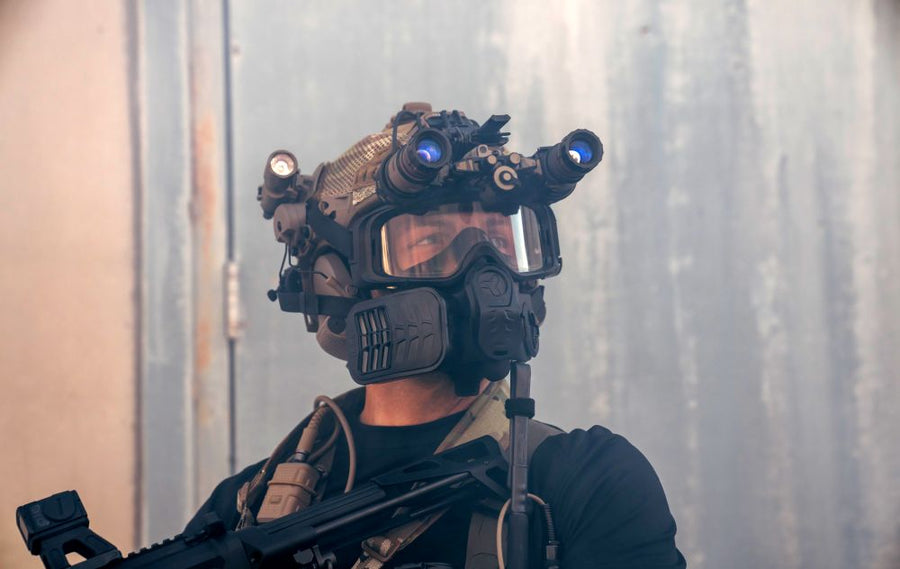
filter configuration uses one filter positioned on one side of the mask. This leaves the opposite side unobstructed, which can facilitate good weapon sighting, provide additional space for other equipment, and reduce potential snag points on the mask.
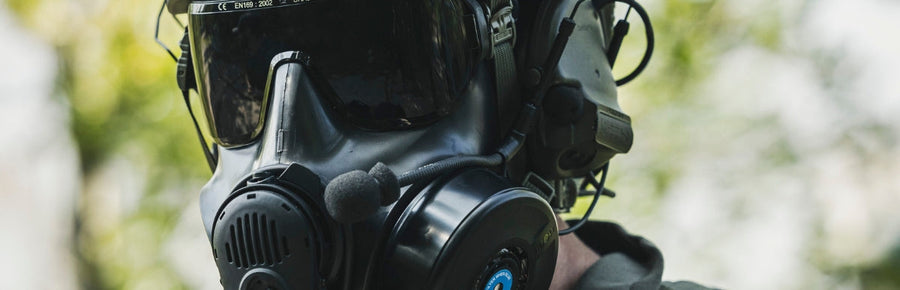
A twin filter configuration uses a filter on each side of the mask. When a respiratory system has been purpose-designed for twin filter operation, dividing filtration across two filters can reduce breathing resistance while distributing filter weight more evenly on the user’s face and neck.
These differences can make each configuration better suited to different operational needs.
These factors can become especially important during extended wear, when breathing burden, equipment integration and overall comfort may have a greater impact on the user.
Why the Approved Filter Configuration Matters
Filter configuration cannot be considered independently from the respirator itself.
Respirators are certified in one or the other, and the certification doesn’t blanket-cover both configurations. A respirator intended for single-filter operation should not be converted into a twin-filter system simply by adding another filter – additionally, this can make certification invalid. Doing so can affect the way the system performs and result in a configuration that is no longer covered by its certification, such as NIOSH or CE certifications.
How to Choose Between a Single and Twin Filter Configuration
Rather than starting with the number of filters, consider the requirements of the application:
-
: Does the respiratory threat require configurable levels of filter protection, or is protection against a specific hazard, such as riot control agents, sufficient?
Thinking about these factors as part of the complete respiratory protection system helps ensure the configuration supports both protection and operational requirements.
Avon Protection’s Single & Twin Filter Configurations
There is no single filter configuration that is right for every scenario or mission. The appropriate choice depends on factors including equipment integration, breathing resistance, weight distribution, and the approved configuration of the respirator.
Avon Protection’s respiratory protection range includes masks designed for both single and twin filter use, including , FM54™, MITR™-M1, and FM50™.
To learn more about our products, visit our full range.